
Insufficient detachment strategies
Postcard 11th August ‘24: MINI roadtrip to Denmark

A girl sitting on the floor of an empty apartment.
Some cleaning supplies are the only probs there are.

This visual can be both - a symbol for leaving a place and a symbol for moving into a new one.
It’s bursting with emptiness. To me, it is a subtle, unsettling setting—a metaphor for painful detachment—abandonment of things, a place, people, or a chapter of life—and a (not-yet) attachment to what will fill the void that’s left. You could find me like that before moving in with Sven. Twice. Once when leaving my old flat and then again sitting between moving boxes in the new one. You could also find me like that again moving out of the tiny room I in-habituated together with Molly in Sweden. And you can certainly find me like that when parting ways with my cars.
Once you have moved several times, you might have more or less mastered the hyped “Thank you for your service” (aka Marie Kondo) decluttering style. Though not being a minimalist, I think I got to part ways with things that are no longer of any service reasonably frictionless. At least in the area of ordinary objects in your life.
Still, I find myself lost when parting ways with more emotionally attached things.
And I am sure you can spot these, too.
I am talking about our attachment to our room, flat, or house, the area we live in, our favourite café, our gym, dear people—random but familiar people—our jobs or side hustles, sports clubs, and still—particular objects, gear, equipment.
Moving fairly often taught me a thing or two about how I am affected by and deal (more or less successfully) with these things. Since I am pursuing an academic career, this next one is likely not our last (uprooting) move. A subtle question of “Will we ever settle?” lingers. This is followed by a more substantial question: “What does settling and rooting even mean in a world that seems to be getting more unpredictable with every blink of your eye?”
I feel there is a slight difference between a moment of romanticising and missing something you genuinely loved and have loving memories of - and suddenly finding yourself in a dark and scary dungeon that robbed you of a piece of yourself.
It is probably a sign of an underlying attachment-issue pattern.
How NOT to detach
We learn from our failed strategies. So, let’s look at the three strategies that have not worked for me in the past.
Failed strategy 1: Uncontrolled melancholy
This is probably the default “strategy” when you are a) emotionally attached and b) have never tried to face things differently. Whenever I would have decided to sell a dear car or move, the melancholy started right away. So many last times now. Soon it will be the last coffee at that café. Maybe you even start to list all the good memories you made in that flat. With this group of friends. With that car. At that job and with your colleagues. You cry at night three months in advance and six months into the future. You are stuck between grief and romanticising melancholy.
Why it does not work: You are a sad bundle of panda eyes. By switching into grief mode, you rob yourself of all these dear memories. And worse, you even stop the joy these things used to bring you even though you could still enjoy them “antemortem” (I am referring to the timeframe between making the decision and the d-day of parting ways). You make it even more difficult for everyone (especially when it comes to farewells from people). I loved my little room in my first shared flat in Sweden SO MUCH. I loved walking Molly in the nature reserve right behind it. It was not my active choice that I had to move out, but the melancholy made grief this little room for more than a year, and I sometimes still have difficulties tapping back into those good memories since I still feel the pain of the grieving, which immediately spirals down into missing the time in Sweden deeply.
Failed strategy 2: Avoidance
Well, new strategy. You try to go as long as you can without thinking about parting from your flat, tribe of people, car, colleagues, etc. Depending on your overall tendency (or “proficiency level”) with avoidance behaviour, you might be more or less successful in applying this.
Why it does not work: Different complications occur depending on your skill level and phase. First, if you suck at avoidance behaviour, your emotions are stronger than your desire to keep them avoided. You end up back with strategy 1. If you are pro-level skilled with avoidance behaviour, you might puzzle other people about how cold-shouldered you seem to handle the upcoming change. Which can hurt the people you don’t want to hurt. Furthermore, once you have parted ways, you either are back to the grief dungeon when memories pop up or or you rob yourself of the joyful memories by kind of numbing them - forever (good luck with that, though; winter is coming).
This strategy might also lead to the fact that after a multiple times of uprooting, you start avoiding even getting close with the new place and people. This ultimately leads to not enjoying the present altogether and hence preventing yourself from living a full life.
Failed strategy 3: Reasoning
This strategy adds a level on top of the avoidance strategy. It tries to use rationality, objectiveness and reasoning. You try to remind yourself why you made the decision. Maybe you even go with more heavy armour and start to list all the NEGATIVE associations. Like any annoying parts. Any sunken costs. Use all the good reasons why you decided in the first place. You negotiate with your emotions. This never worked for me. I grieved a car that I spent way too much money on fixing and that “abandoned” me repeatedly. I grieved this little room in Sweden despite it being tiny, and there were plenty of things that were not ideal and even bothersome with the overall living situation.
Why it does not work: In my experience, your emotions are more substantial than finding those negative reasons “post-mortem”. The good experiences mean way more to you (even though this might be very subjective), but you will never out-rationalise them. If at all, you end up with the issues from strategy 2.
In conclusion, we must find a way to preserve the good memories without sinking into the deep sea trenches of grief.
Hence, this time (aka moving to Denmark), I want to handle things differently.
Though, apparently, I didn’t manage my attachment issues all too well either when moving to Sweden and Svalbard, I might still have gotten a certain level of awareness about the things I am repeatedly (too) strongly attached to.
The most urgent struggle is my MINI. We most likely went on our final solo road trip together this week.
I wish I could present you with a mastery plan, but I can’t (yet). I am still fumbling around. It is a kind of self-experiment. A mission.
And Mikaela Blackler @livingtostayawake just gave me a hint to look into the concept of non-detachment! I just researched a bit and it looks promising:
Non-attachment considers engaging with life’s experiences without clinging to them, fostering adaptability, and well-being by accepting life as it unfolds. -Insighttimer
So, I feel this is precisely what I will lean more into during the phase that follows the “parting ways” of this time. Like “rooting” again without becoming attached. Something tells me it is a “rooting the things related to our attachment issues in ourselves”.
Another thing I am wondering about is the things that I don’t struggle with (too much). What do these tell me about myself and how I get rooted in a new place?
I am super curious about your thoughts and experiences on this topic!
About this week’s postcard
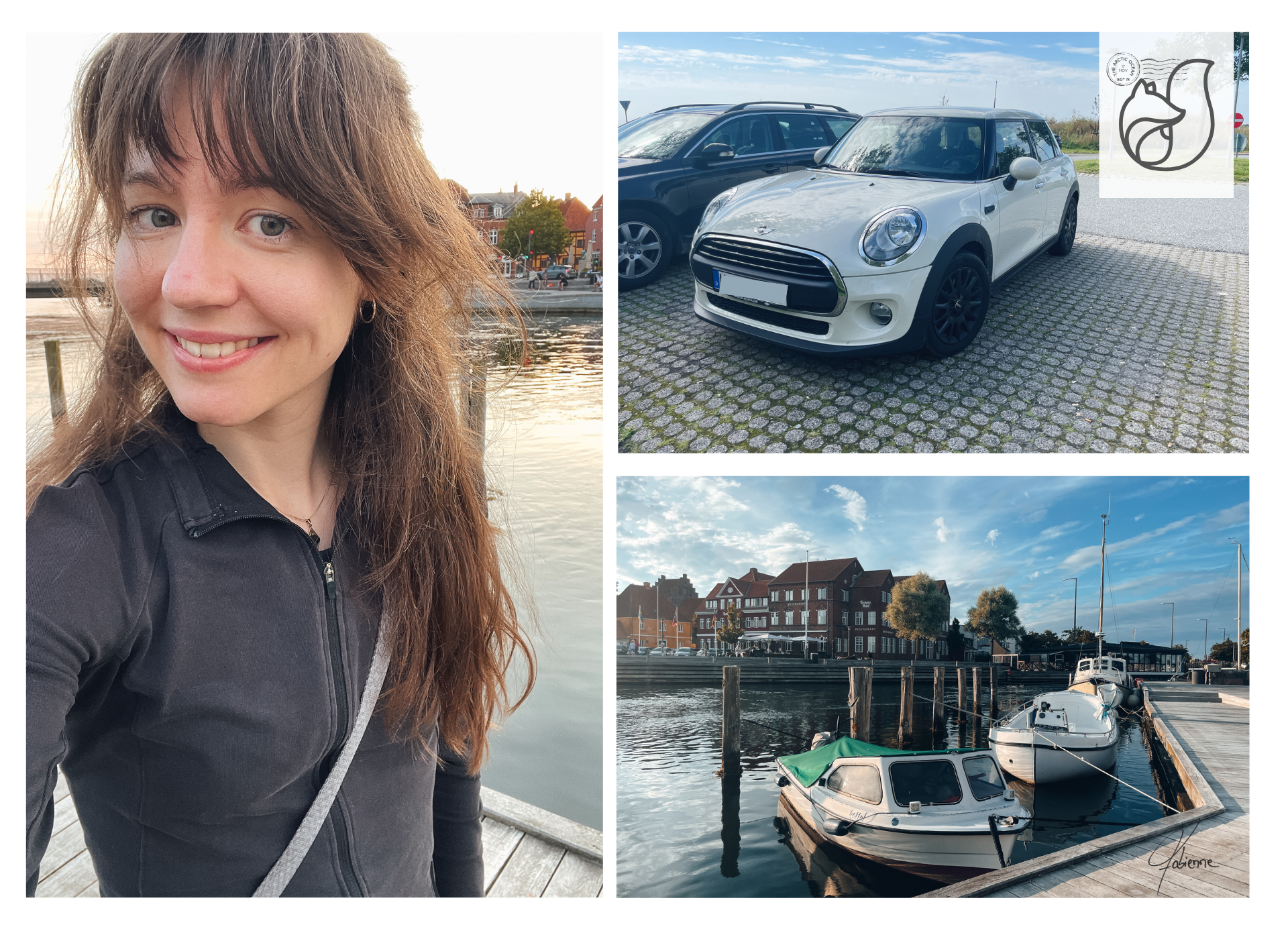
I also thought you might enjoy two atmospheric videos from Kerteminde, Denmark 🥰
Relocating the pack to DK
On Wednesday, there was a showing of our apartment. Since I was in Denmark, Sven was there with the real estate agent. It is still a weird feeling to have other people roaming through your home to see if they want to make it theirs. Probably, that also inspired today’s theme a bit 😅
I have also submitted the first online form we need to apply for residency in Denmark.
On my desk
Away from my desk - but this week was my first mission for the PhD fellowship. As mentioned in last week’s postcard, I was able to join my two professors during part of a bio acoustics summer course at a marine biology research station in Kerteminde, Denmark.
I attended lectures and practical exercises, including a small boat trip and first insights into behavioural marine mammal research. I met so many inspiring and kind people. My head is just swirling with mathematical and physical concepts, as well as so much new knowledge about marine mammals, their hearing, and communication!


On my ears, page or screen
I listened to an audiobook during this week’s road trip to Denmark. It was a fiction crime novel about a Japanese police inspector in Hamburg (it is actually a series, but it is only available in German).

Things that made me smile, laugh, think, cry or curse this week
Smile & laugh
This whole week. I didn’t think my excitement for the PhD fellowship could still get any higher, but this week just got me totally stoked.
The cute and magical atmosphere in the Danish town Kerteminde.
One night, we spent time on the sun deck of the research station with a few people and got kind of eaten alive by mosquitos. When we all decided to leave, some of the other visiting researchers wanted to have a quick look at one of the sailing boats docked at the station. In the end, we all squeezed into the sailing boat and just chatted away in the darkness—safe from the mosquitos. It was super cosy.
Receiving a super cute seal sticker from a scientist who just came from California to teach some lectures during this week and we connected right away.


The incredible feedback I received on last week’s postcard 🥰✨.
Sending out a thank you postcard to my first founding subscriber!
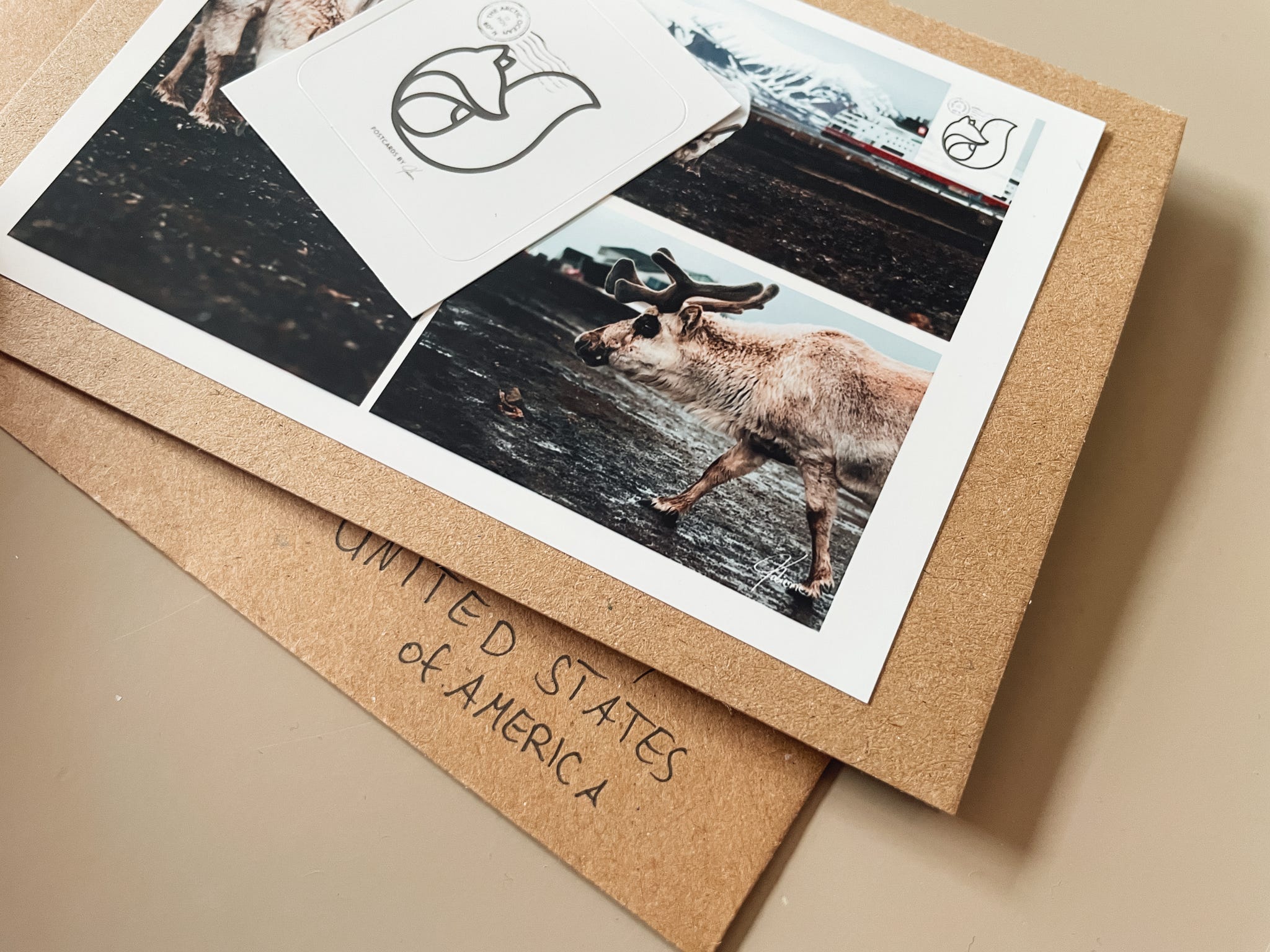
(*paid subscriptions)
Think
The lectures and practical exercises I attended this week inspired me to consider the directions and ideas I would love to pursue during my PhD and beyond.
Cry & curse
Being thrown into the severely cold waters of the physics and mathematics of acoustics. We are talking Pascals, micro Pascals, Volts, decibels, and logarithmic functions. It is not toooo crayz, but it is simply a lot. I can get easily frustrated if I don’t grasp concepts immediately. However, learning and fully understanding (marine bio) acoustics is part of the PhD process. So I better get used to cluelessly fumbling around and embracing that things take time and patience 🤣
The traffic around Hamburg. Like seriously, it is not fun. But we will also have to get used to that since there is no freaking way around avoiding Hamburg when travelling between Germany and Denmark (by car).
Up next
Three weeks to go until we move, and three things will dominate these following weeks:
Confirming logistics and actual moving date
Finishing some research tasks since my colleagues are back from their summer vacations
Preparing the paperwork for Denmark
I will need coffee. Plenty of good coffee 🤣
Hug,

Good luck with the move. Notice how the dog (ai version) is just happy to be with you. Doesn't matter where you are as long as you're all together :-)
I get what you're saying in these strategies. It's insane how relative they are. Honestly though, the best part of your post to me was your future work. That is going to be awesome to read about as you move forward. I hope your move goes smooth!